

Accessibility in a Church: the Ozzero Project That Opened the Doors to the Community
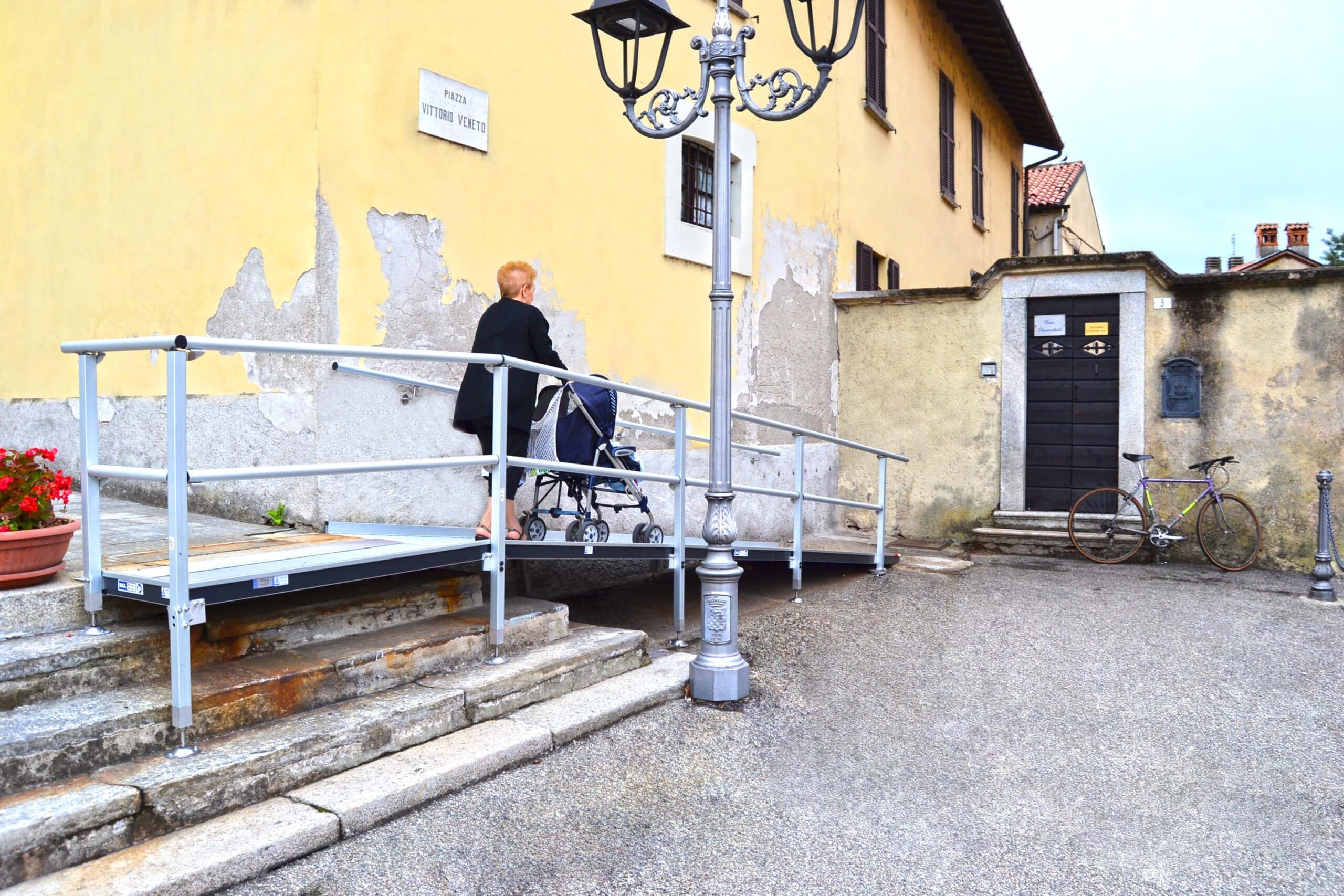
In the small town of Ozzero (Milan), among the plains of the Po Valley, stands the parish dedicated to the Church of St. Siro—an ancient building whose churchyard, until recently, was marked by one step after another, a real obstacle for older people, families with strollers, and individuals with reduced mobility.
The accessibility project promoted by the local community took on a broader meaning: not only removing barriers—even physical ones—but renewing the idea of participation and openness.
“A ramp is not just a technical structure,” said a local project representative, “but a concrete gesture that says: ‘you can enter too, you belong here.’”
The context and the technical challenge
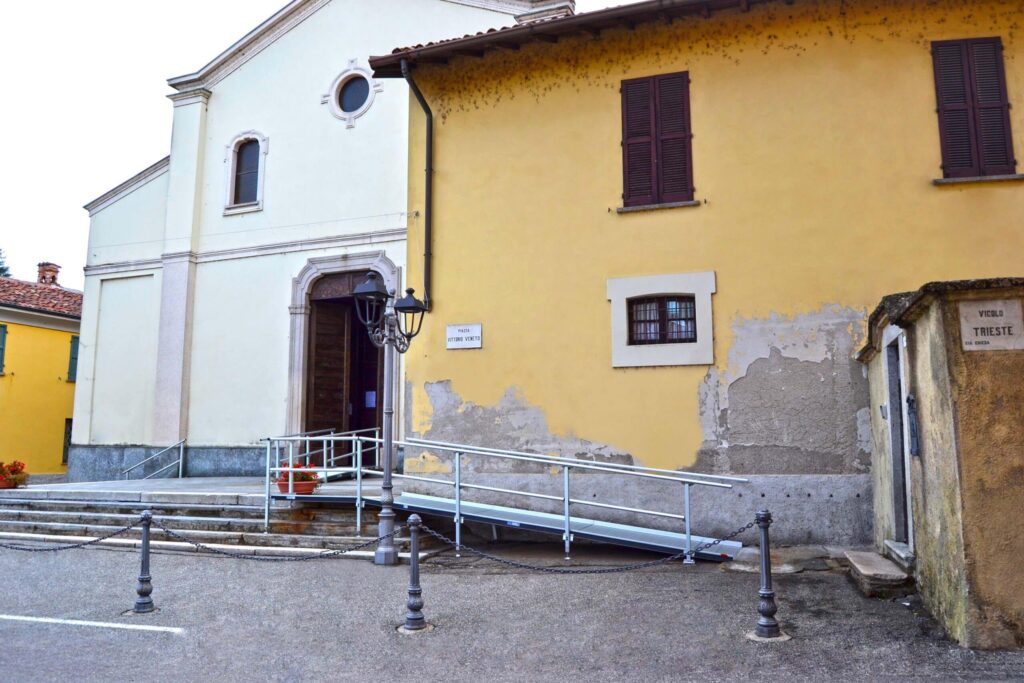
The Church of St. Siro has medieval origins, was expanded in the 16th century, and is set within a historically significant context. The churchyard is raised above the square, with a height difference formed by stone steps on a precious and delicate paving. Any intervention had to respect the history, materials, and function of the site.
The project involved the installation of two custom-designed ramps:
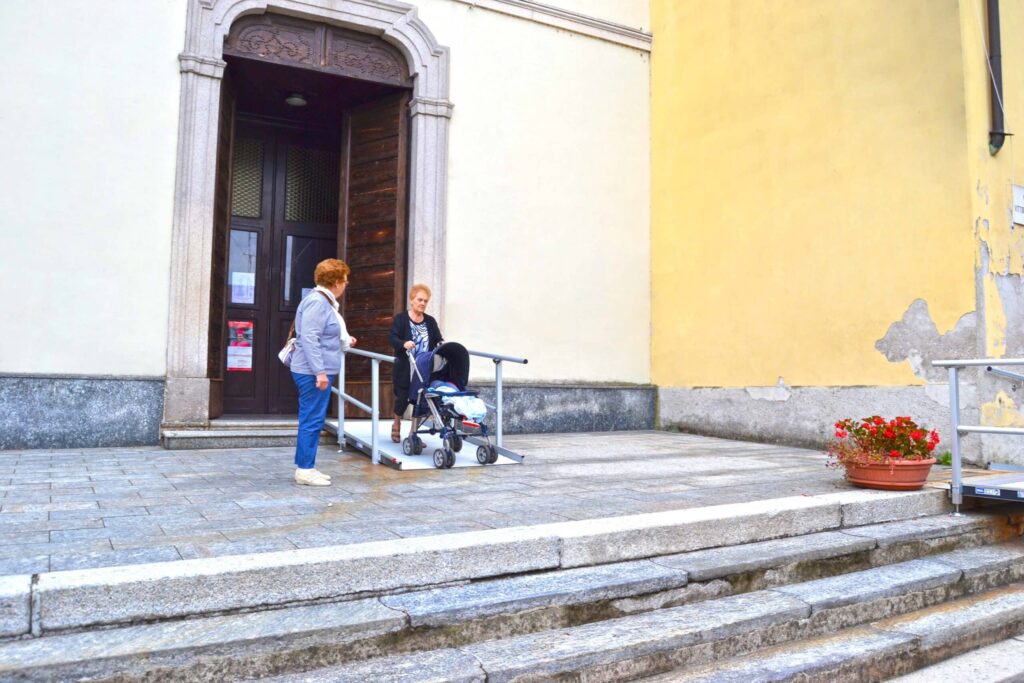
- a first ramp at the main entrance, to overcome a pair of steps;
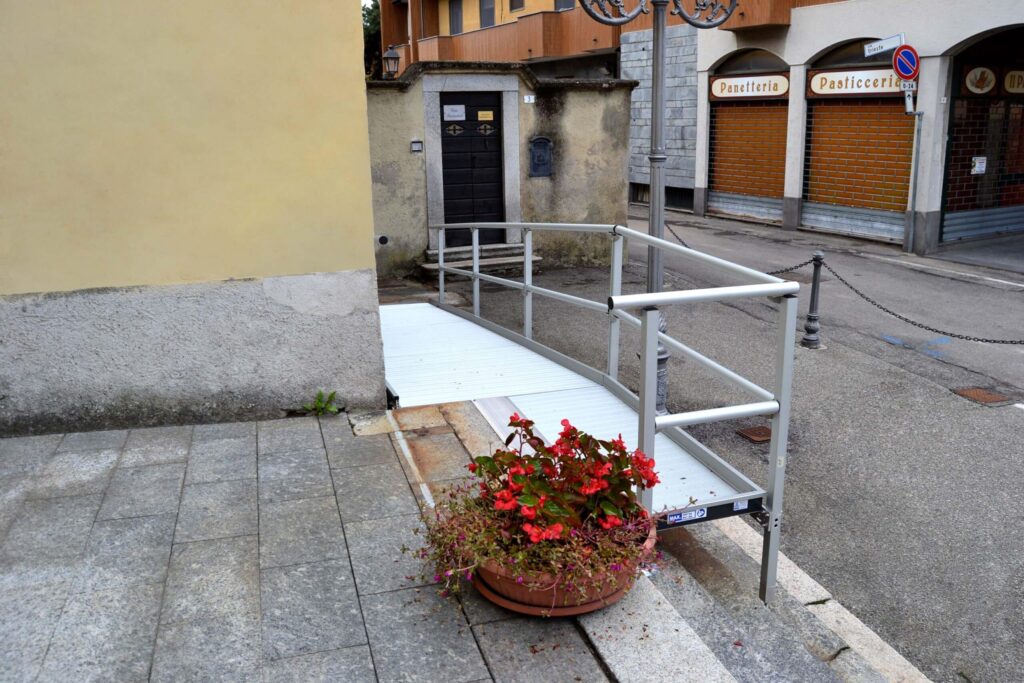
- a second side ramp, providing access to the churchyard from a portico with a greater height difference.
The technical system is modular, made of lightweight, non-slip aluminum and designed to respect the architectural context—a challenge that combines aesthetics, functionality, and safety.
Materials, slope, and respect for the setting
The design followed regulations and best practices: moderate slopes, resting landings, and handrails on both sides. The material—anodized aluminum—ensures durability, weather resistance, and minimal maintenance.
In a historic building with stone façades and original steps, preserving visual integrity was essential. For this reason, the ramp was delivered with a sober finish, chromatically aligned with the stone of the building, and discreetly integrated into the churchyard.
The social value of open access
When a ramp is installed in a place of worship, its value goes beyond technical compliance. It represents openness and a welcoming community. An accessible church invites participation. In practical terms, studies estimate that facilities removing barriers can increase public participation by up to 20–30%.
Today, the church in Ozzero can welcome older people who previously avoided the staircase, parents with strollers, and visitors with mobility impairments. For the parish community, this is a true victory for inclusion.
Why choosing an experienced partner matters
In projects like this, technical expertise alone is not enough. Experience, sensitivity to historical contexts, and the ability to design custom solutions are essential.
This is where a specialized company like WM System comes in. With over 35 years of experience in access ramps and mobility solutions, WM System supports public bodies, parishes, hospitality venues, and companies in creating safe, compliant, and long-lasting interventions.
As a WM System technician notes:
“Every ramp we install is not just a piece of metal—it’s an opportunity, a door opening.”
The Ozzero project shows that accessibility and cultural heritage can coexist, and that every height difference overcome represents a gesture of participation and respect for all.
For anyone looking to make a space accessible—whether historic, public, or private—the choice of partner makes all the difference. WM System focuses not on the problem, but on the solution.
📩 Want to make your space accessible too? Contact WM System today and discover how to turn your project into reality.


