
Temporary or Permanent Ramps? A Guide to Choosing the Right Solution
When it comes to accessibility, the first question to ask is not “How much does it cost?” but “Who am I doing this for?”.
Only then comes the “how”.
Not all ramps are the same, because not all needs are the same.
Some people need to overcome a single step to access a shop, others want to make a historic building accessible, some manage temporary events, while others simply want to allow a family member to move independently.
In each of these cases, choosing between a fixed ramp and a temporary ramp makes a difference—not only technically, but culturally as well.
And as WM System, an Italian company and a leader in the design of loading and access ramps, explains:
“a ramp is never just an inclined plane: it is a solution designed to restore freedom of movement.”
Fixed ramps: choosing stability
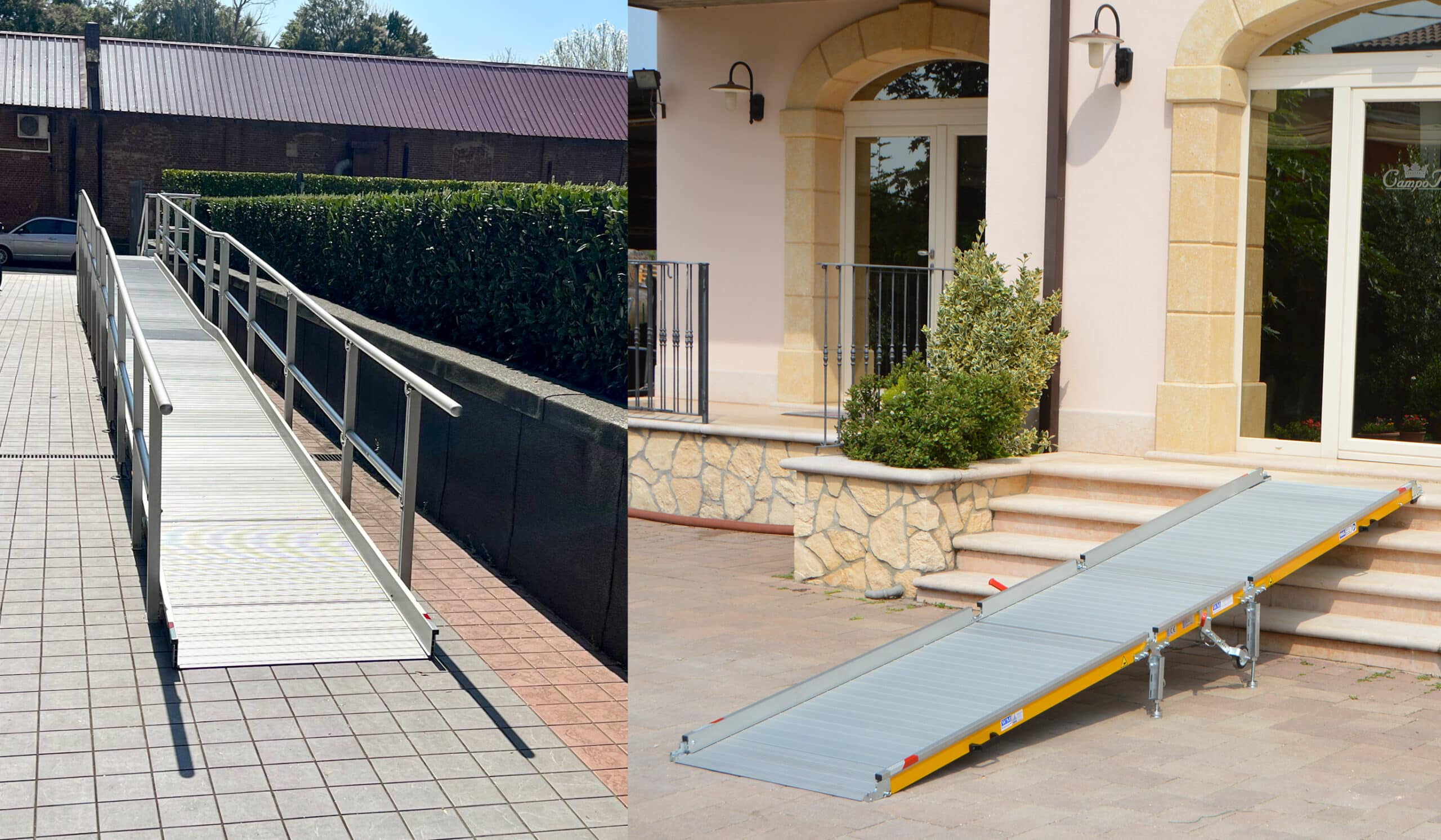
Fixed ramps are the most solid and definitive solution for those who need constant, safe access that is fully integrated into the architectural context.
They are ideal for public buildings, schools, offices, healthcare facilities, places of worship, and companies where people with reduced mobility require daily access.
Custom-designed fixed ramps can be harmoniously integrated into the building without compromising aesthetics. The materials used—such as anti-slip anodized aluminum—ensure resistance to weather conditions, long durability, and minimal maintenance.
Technical data and regulations
According to Italian Ministerial Decree 236/1989, the slope of a fixed ramp must not exceed:
- 8% for height differences up to 75 cm,
- 5% for longer or permanent stretches.
Each section must include resting landings, handrails, and non-slip surfaces.
These requirements are not just legal obligations, but real safety guarantees for users.
“Fixed ramps are the most reliable solution in public and corporate settings,”
explains Gerardo De Micco, Head of Architectural Barriers at WM System.
“When a building welcomes hundreds of people every day, accessibility must be structural, not temporary. A well-designed ramp becomes an integral part of the place.”
When to choose it
- Daily and continuous access
- Adequate space for proper slope
- Need for integrated design or heritage/protected contexts
- Mandatory regulatory compliance for public bodies or healthcare facilities
Temporary ramps: smart flexibility
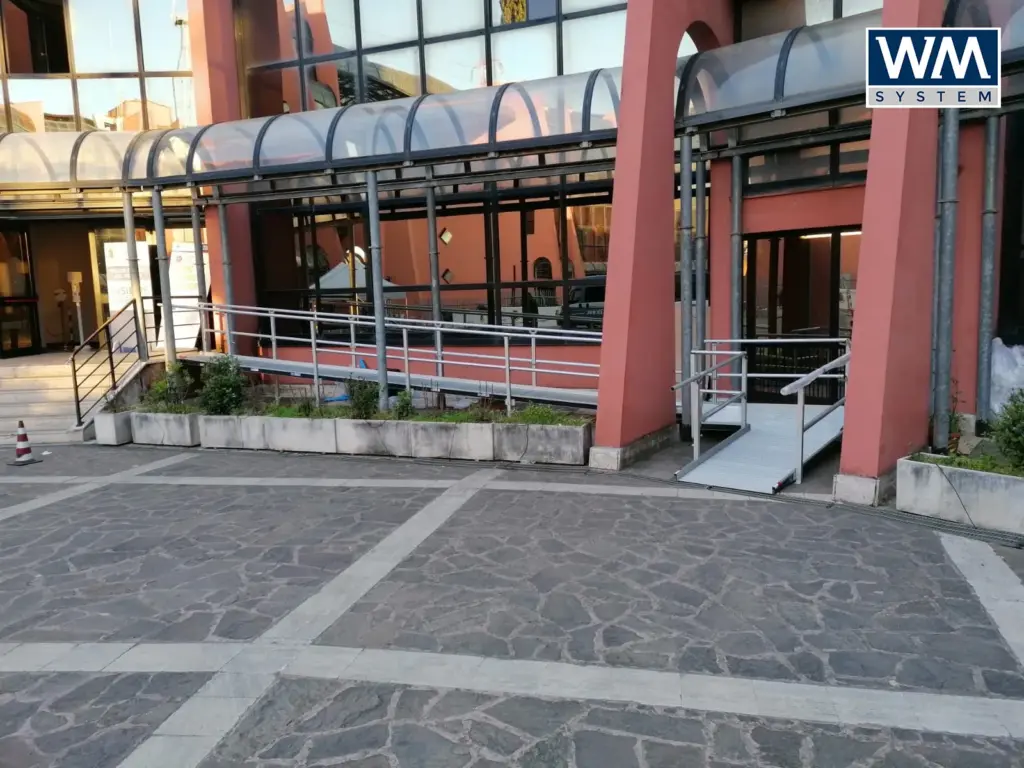
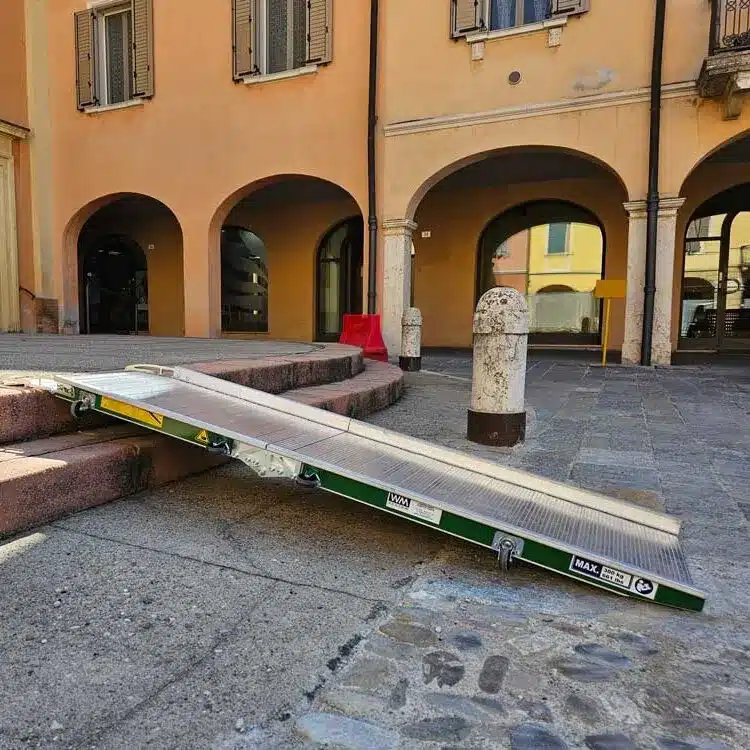
Mobile or temporary ramps are designed for dynamic contexts: events, trade fairs, venues, exhibitions, shops, or buildings with historical or urban constraints where permanent structures are not allowed.
They are lightweight, easy to position and remove, made of durable yet manageable aluminum, and can be customized for different heights and widths.
Many WM System models are equipped with handles, wheels, and folding systems, making them easy to manage even by a single person.
“A permanent ramp isn’t always necessary. In some cases, the best solution is the one you can move where it’s needed,”
says Ilaria Ghidoni, Head of Sales Italy at WM System.
“That’s exactly why our mobile ramps exist: to bring accessibility everywhere, quickly and easily.”
Practical data
- Load capacity up to 400 kg
- Variable lengths from 60 to 325 cm
- Adjustable structures with anti-slip plates and safety edges
When to choose it
- Temporary or seasonal access needs
- Public events, fairs, or festivals
- Venues with historical or architectural constraints
- Situations requiring an immediate, removable solution

How to understand which solution is right for you
Choosing between a fixed and a mobile ramp is not purely a technical decision.
It requires a multidisciplinary approach that considers:
- who will use the ramp (people, equipment, mobility aids, goods);
- frequency of use;
- required safety level;
- surface type;
- local regulations and structural constraints.
This is why WM System offers customized assessments, on-site inspections, and targeted consultancy, ensuring the best balance between efficiency, safety, and comfort.
“There is no universal ramp—only well-designed solutions,”
reiterates Gerardo De Micco.
“Every installation is a story in itself, and our job is to build it with the same care as a tailor-made suit.”
Many people believe that a simple plank or inclined surface is enough to make a place accessible.
Nothing could be more dangerous.
Improvised or non-compliant ramps create more risks than solutions: slipping, tipping over, excessive slopes, or unsuitable materials.
The cost of a professional ramp is always lower than the cost of an accident, a complaint, or a fine.
But above all, a well-built ramp protects the dignity of those who use it.

Accessibility as a value, not an exception
In a world that increasingly talks about sustainability, equity, and inclusion, making places accessible means designing for people—not for “special cases”.
A ramp is not a favor; it is an architectural right.
For over 35 years, WM System has combined engineering, design, and a culture of access to offer safe, certified, and customized solutions—from ramps for public buildings to mobile solutions for events, and bespoke modular systems.
“Every ramp we build is a step forward for someone,”
concludes the WM System team.
“And when moving becomes easier, the world becomes fairer too.”
If you’re considering how to make an entrance, an event, or a workspace accessible, rely on those who do it with experience and passion.
WM System is the ideal technical partner for public bodies, companies, and professionals seeking durable, safe, and fully compliant solutions.
👉 Discover the right ramp for your project at wmsystem.com
or contact us for a personalized consultation.


