

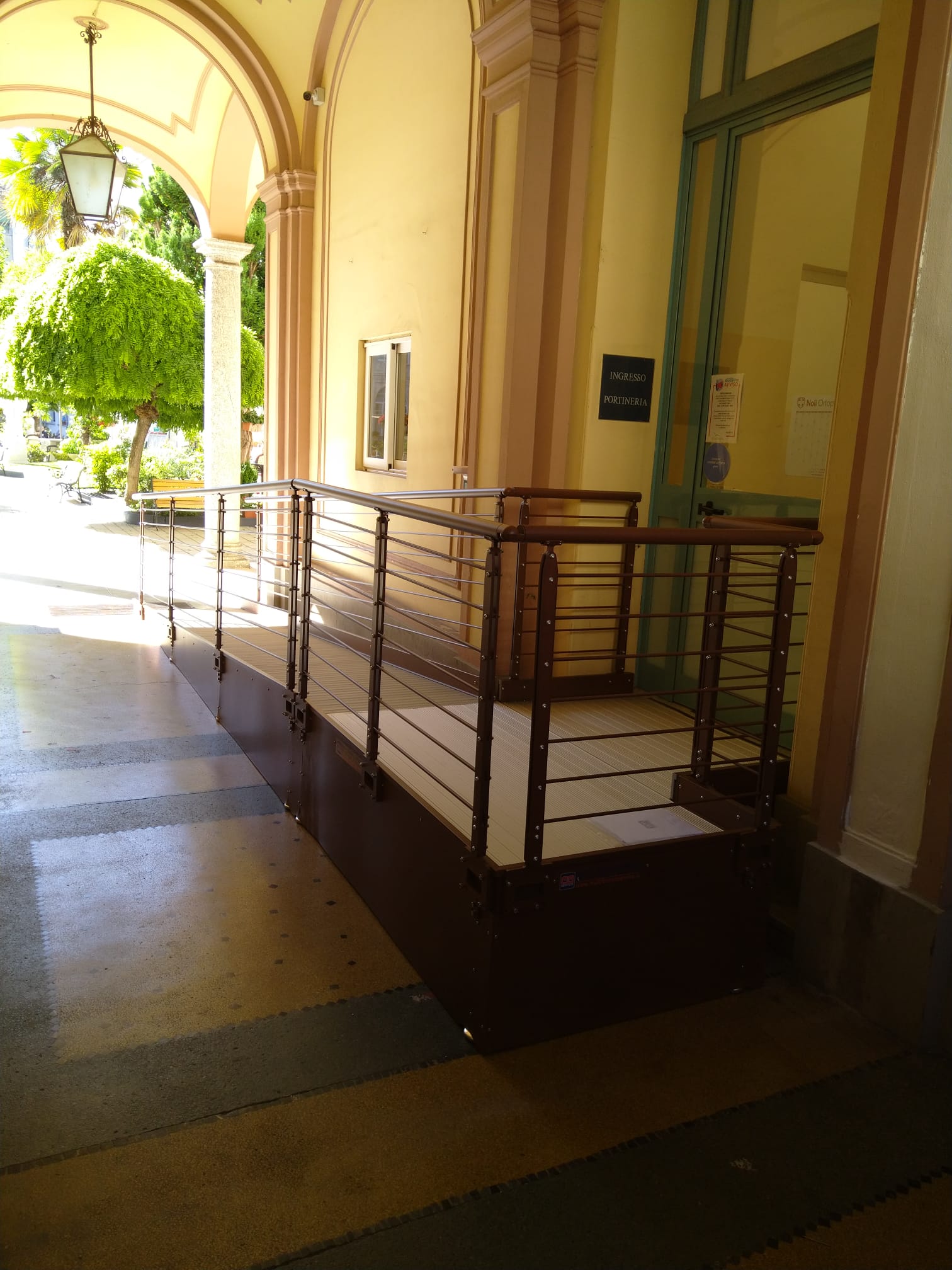
“A Step Is Never Just a Step: Why Architectural Barriers Affect Everyone”
Some obstacles are immediately visible; others remain invisible to those who have never had to live with them firsthand.
A step at the entrance of a café, an improvised wooden ramp, an elevator that’s too narrow—elements that may seem marginal, but for millions of people they mark the difference between freedom and exclusion.
According to ISTAT data, over 3 million people in Italy live with motor disabilities, but the real number of people who face architectural barriers every day is much higher:
📊 one in four people, including older adults, parents with strollers, workers handling loads, or people with temporary injuries.
Architectural barriers, therefore, are not a niche issue—they concern all of us, at different moments in life.
“Every time you remove an obstacle, you create one more possibility,”
say the team at WM System, the Italian company that has been designing and manufacturing access ramps and mobility solutions for over 30 years.
“A well-designed ramp doesn’t just overcome a height difference; it helps make the world fairer and more accessible for everyone.”
Architectural barriers are not just walls and steps
When we talk about architectural barriers, our minds often go straight to physical obstacles: steps, stairs, sidewalks without curb cuts. But the real barriers are often cultural and design-related.
They are the result of a mindset that places the “norm” at the center, forgetting the diversity of bodies, needs, and situations.
An accessible city is not one that “fixes” what’s missing afterward, but one that is designed from the start with everyone in mind.
And this mindset affects everything: urban planning, tourism, retail, and culture.
The UN Convention on the Rights of Persons with Disabilities (ratified in Italy in 2009) reminds us that accessibility is a condition of citizenship, not an optional service.
It’s not enough for a space to be technically compliant—it must be livable, welcoming, and safe.
Why a single step can change how a place is perceived
Imagine arriving at a museum, a church, a town hall, or a small neighborhood shop.
A 10 cm step may seem trivial.
Yet for a wheelchair user or someone with reduced mobility, it means not being able to enter at all.
A step can become a symbol of exclusion—an implicit message that says, “this space is not for you.”
“An architectural barrier is not just a physical limit; it’s a cultural one,”
explains Gerardo De Micco, Head of the Architectural Barriers Division at WM System.
“Every access ramp, on the other hand, is an act of welcome.
It’s tangible proof that accessibility is part of how we build community.”
Accessibility and data: how far behind we still are
According to the 2023 Cittadinanzattiva Report, over 65% of Italian public buildings still have architectural barriers.
Only one school out of three is fully accessible.
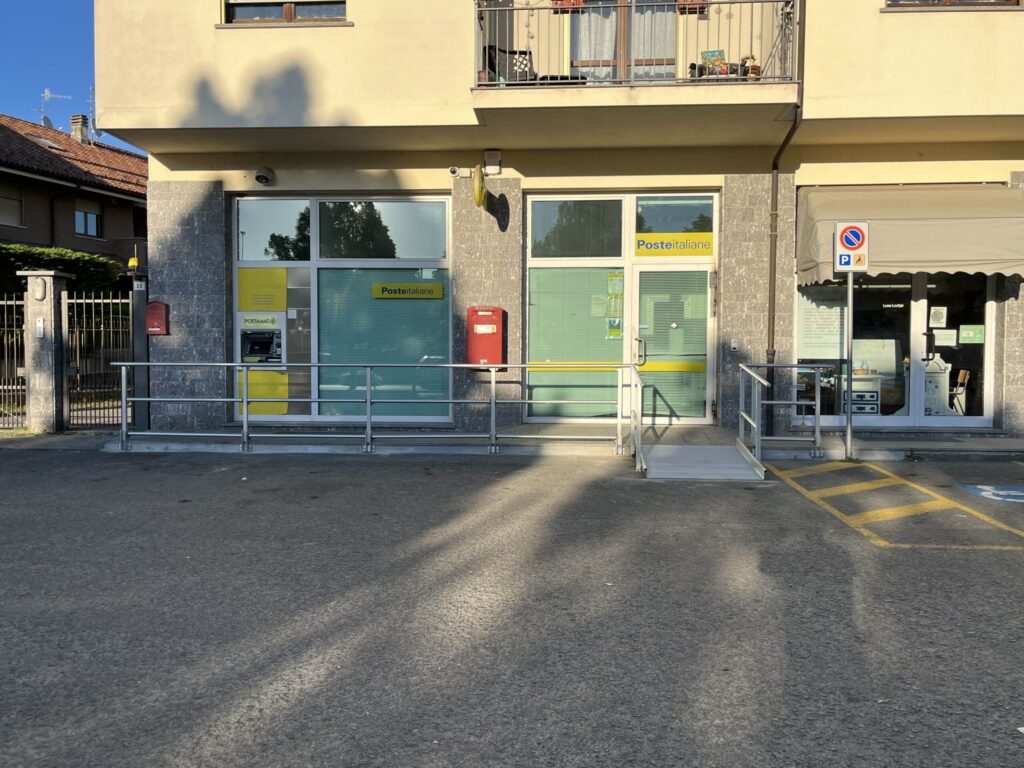
And in the private sector, the situation isn’t much better: only 40% of retail businesses are equipped with a ramp or facilitated access.
Yet making a space accessible is not only a legal obligation—it’s a social and economic advantage.
An accessible place is more frequented, more welcoming, and more modern.
And it sends a powerful message: you are welcome here.
Italy and the accessibility we can achieve
In recent years, thanks in part to the PNRR and urban regeneration funds, many administrations have begun upgrading public spaces, schools, parks, theaters, churches, and historic centers.
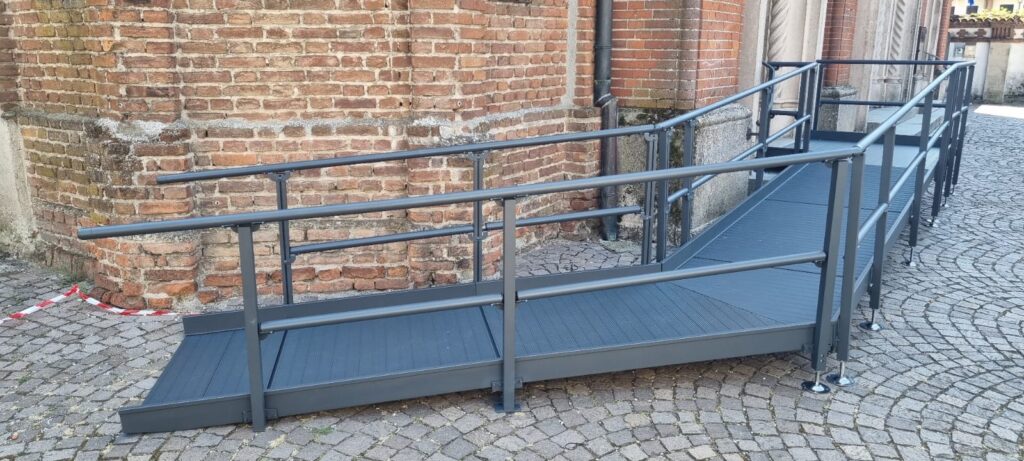
When properly designed, new access ramps successfully combine aesthetics, functionality, and respect for the surrounding context.
A concrete example is the Basilica of Aquileia, where WM System installed an aluminum ramp designed to integrate seamlessly with the historic architecture.
Not an “added structure,” but a harmonious gesture between technology and cultural heritage.
“Our ramps don’t just overcome a height difference,”
explains Ilaria Ghidoni, Head of Sales Italy.
“They are designed to dialogue with the space, respecting it.
Because accessibility should never feel invasive—it should feel natural.”
The ramp as a symbol: when engineering meets culture
Every ramp is a technical project—slope, load capacity, materials, regulations—but also an act of trust in the future.
Because a ramp doesn’t serve only today; it will still be there tomorrow.
And it tells a different story: the story of those who chose to remove an obstacle, not ignore it.
Behind every WM System ramp are hours of design, testing, and dialogue with public bodies, engineers, and people.
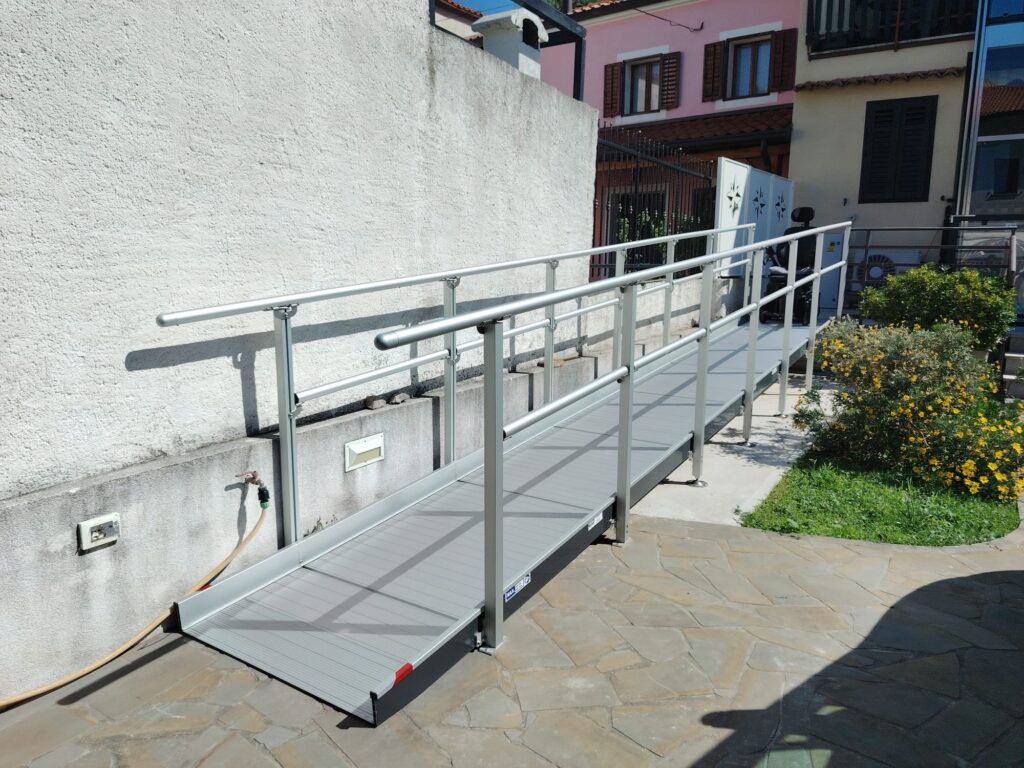
Each structure is made of anodized, non-slip aluminum—lightweight yet strong—using certified, long-lasting materials.
And above all, it is custom-designed for its environment and for those who will use it.
“True innovation isn’t about inventing something new,”
say the WM System technical team,
“but about designing something that makes people’s lives simpler, safer, and more dignified.”
Accessibility: an investment, not a cost
Too often, accessibility is seen as an expense.
In reality, it’s an investment that generates value—social, human, reputational, and economic.
An accessible building welcomes more customers, builds trust, and improves the livability of an area.
Inclusion is not a luxury; it’s a form of efficiency.
Every well-designed ramp reduces effort, risk, and future maintenance costs.
Every barrier removed creates new opportunities—for citizens, businesses, and communities.
A step is never just a step.
It’s an invisible line separating those who can from those who cannot.
But every time that line is erased, a part of the world becomes fairer, more welcoming, and more human.
For over 30 years, WM System has been working to make this possible, with fixed, mobile, and custom ramps designed to ensure safety, durability, and architectural integration.
📞 Want to make your space accessible?
Talk to those who do it every day, with passion and expertise.
👉 Contact the WM System experts.


