

How Much Time Can You Save with a Mobile Ramp: Numbers and Real-World Cases
In the world of transport and logistics, time is the primary asset.
Every minute spent loading or unloading a vehicle is an extra cost—in fuel, labor, and cascading delays.
That’s why more and more companies are choosing to optimize a phase that is often underestimated: loading and unloading.
In this field, a simple ramp can make the difference. But a WM System ramp is never “simple.” It is the result of years of design, testing, and innovation, created to combine mobility, safety, and operational speed.
The numbers: up to 50% time saved
According to an internal WM System analysis conducted with clients in the transport and mobile workshop sectors, a well-designed mobile ramp reduces loading and unloading times by 40% to 50% compared to manual or improvised solutions.
Translated into business terms, this means dozens of hours saved each month and greater safety for operators.
Let’s look at a practical example:
- a van performing 10 loadings per day with manual systems takes an average of 10 minutes per cycle;
- with a WM System mobile ramp, the same process drops to 5–6 minutes.
Over a 22-day working month, that means more than 7 hours saved per vehicle.
Seven hours that turn into higher productivity, less fatigue, and more on-time deliveries.
“Logistics efficiency isn’t measured only in big numbers,”
explains Ilaria Ghidoni, Commercial Representative for loading ramps at WM System.
“It’s measured in the daily gestures of those who have to go up and down a vehicle twenty times a day.
And every time a ramp comes into play, you gain safety and valuable time.”
What makes a mobile ramp more efficient
Not all ramps are the same.
An improvised ramp or one that’s too heavy to handle can cancel out any advantage.
WM System mobile ramps are built on a simple yet engineering-driven principle: turning effort into operational fluidity.
Here are the key factors behind their efficiency:
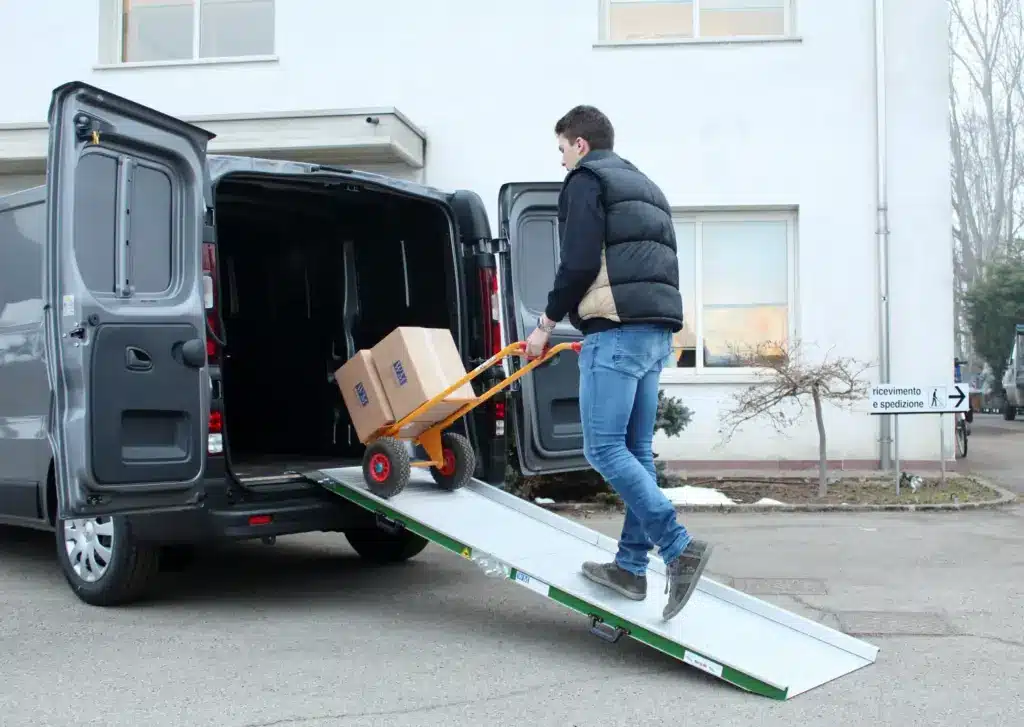
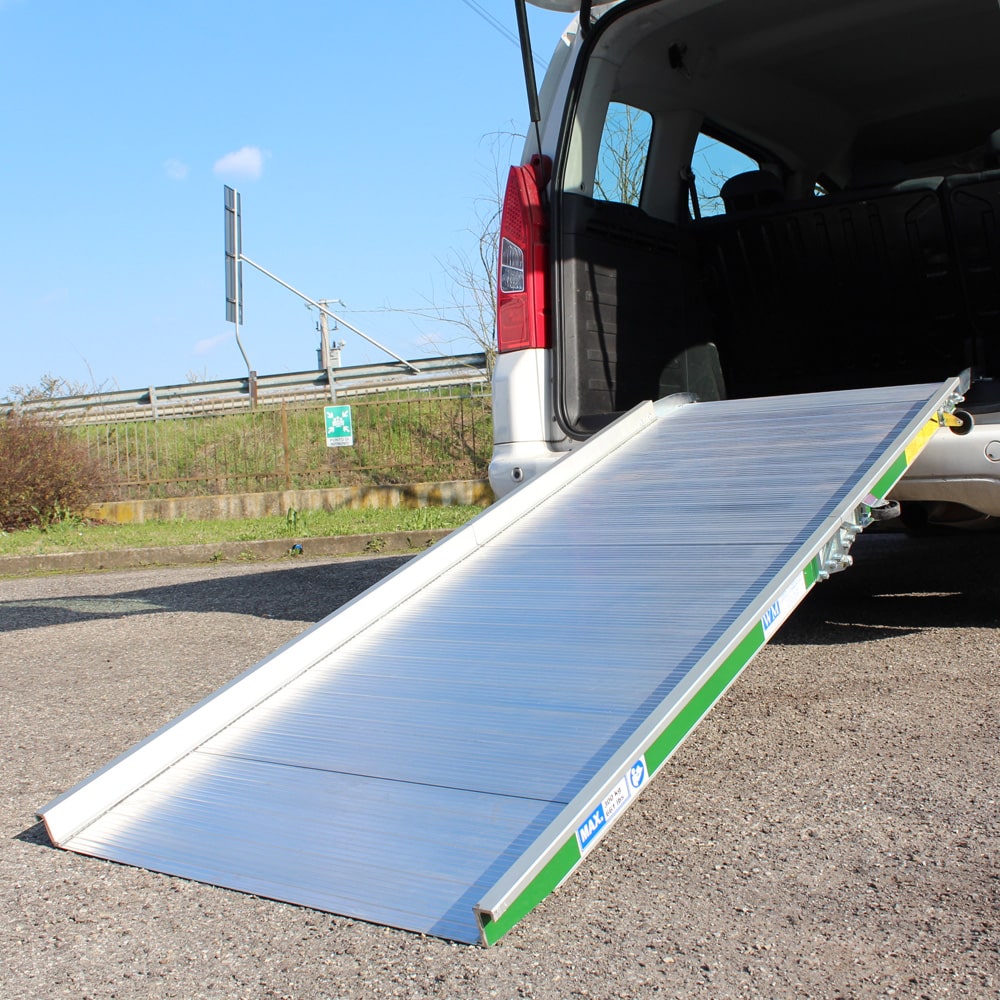
- Low weight, maximum strength – thanks to anodized, non-slip aluminum: lightweight, ultra-robust, rust-free, and weather-resistant.
- Smooth, balanced opening system – allowing the ramp to be opened and closed in a single movement, without strain.
- Certified non-slip surface, even in rain or dusty conditions.
- Universal adaptability – WM System ramps fit almost all commercial vehicle models and can be customized in size, load capacity, or color.
- Zero maintenance – aluminum and internal hinge systems require no complex servicing, ensuring years of continuous use.
“When a ramp works well, you don’t even notice it,”
comments Simone Ferraresi, Technical Graphic Designer at WM System.
“And that’s exactly the point: it should become a natural extension of the vehicle and the operator’s work.”
Real cases: efficiency proven in the field
Case 1 – Mobile industrial maintenance workshops
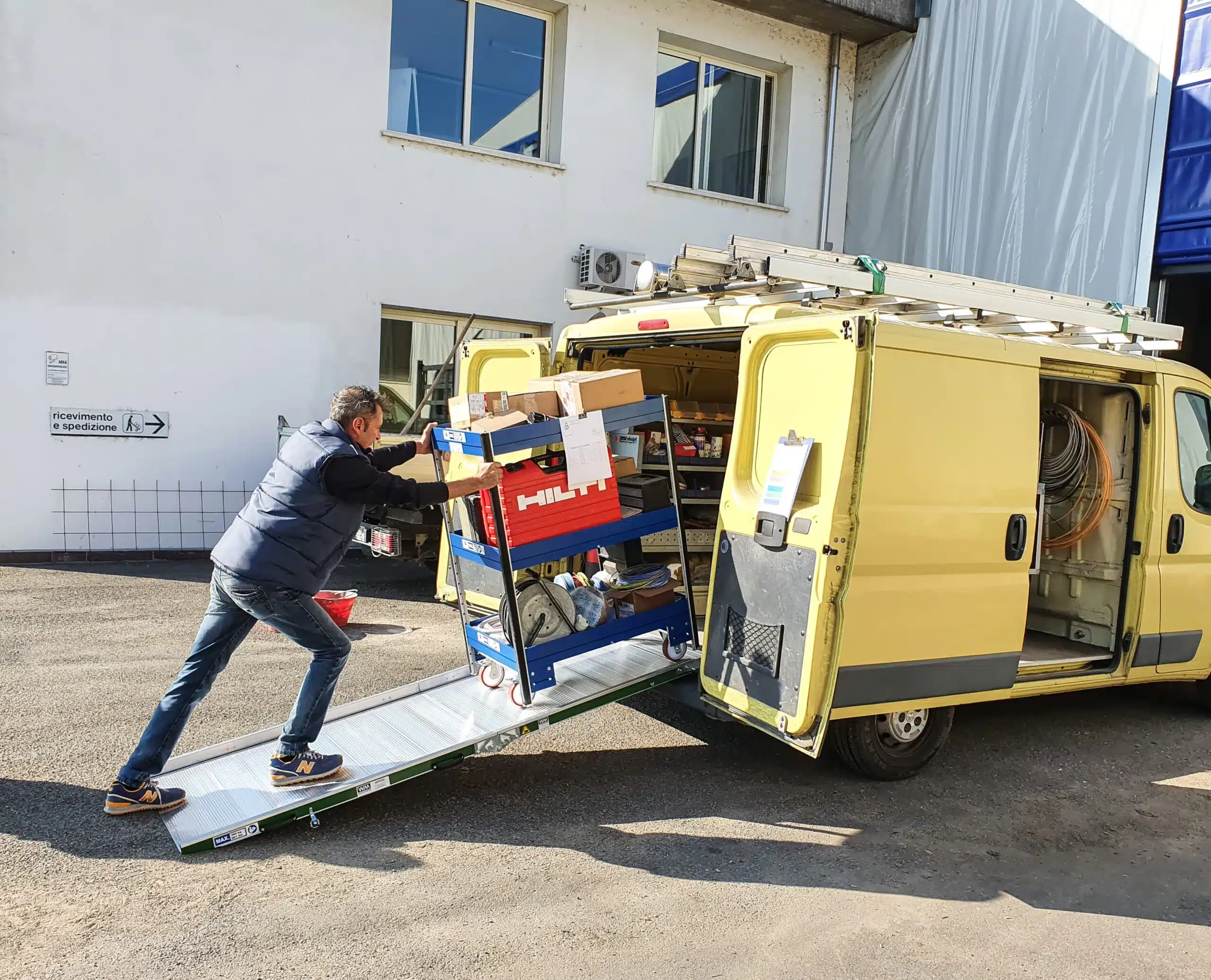
A company in the plant engineering sector installed WM System ramps on its vans to handle portable machine tools (average weight 200 kg).
Result: a 45% reduction in loading times and a significant decrease in handling-related injury risk.
Technicians report less fatigue and greater autonomy, even when working alone.
Case 2 – Postal transport and light logistics
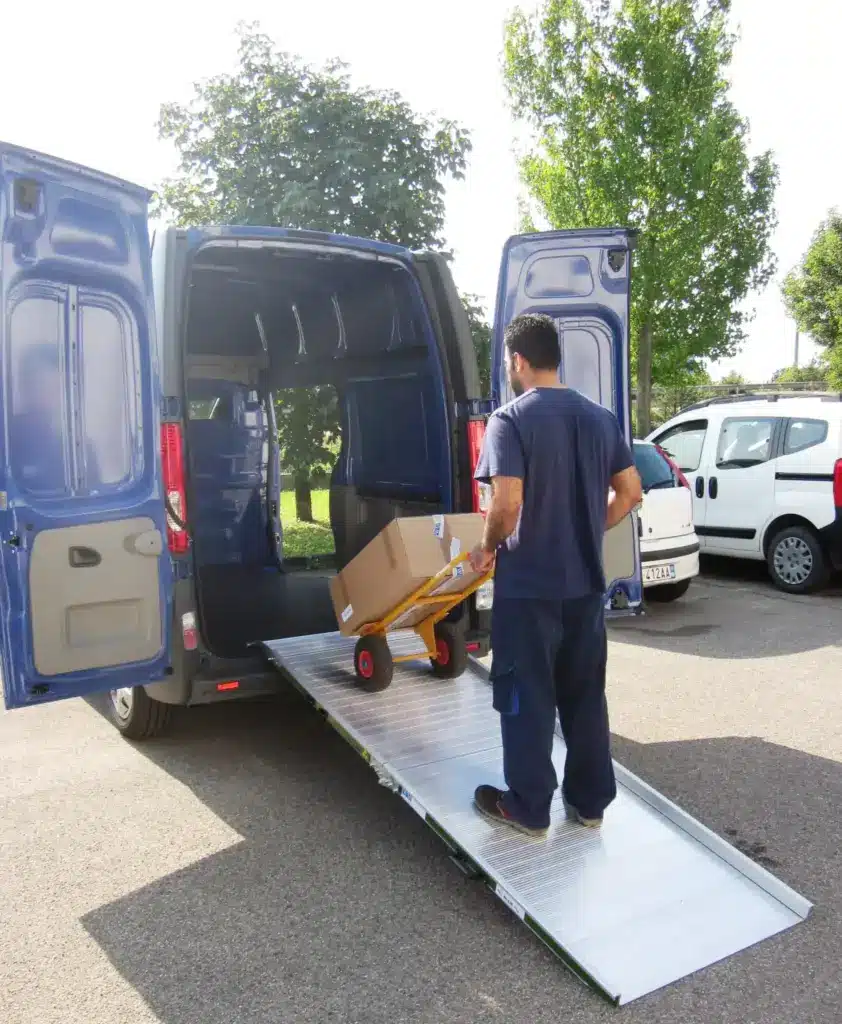
A fleet of over 30 vehicles replaced steel inclined planes with WM System ramps.
In addition to halving operation times, maintenance costs were reduced by 20%, thanks to the durability of materials and the lightweight structure.
Case 3 – Events and temporary installations
In the events and trade fair sector, speed of setup is critical.
WM System mobile ramps made it possible to load and unload installations during continuous 12-hour cycles, ensuring stability, safety, and reliable timing even in challenging conditions.
Time, safety, people: the true value of efficiency
Saving time doesn’t just mean working more—it means working better.
Every minute saved during loading is a minute gained for maintenance, planning, or simply reducing physical strain.
In a sector where operators are constantly on the move, ergonomics is as valuable as technology.
WM System designs its ramps to maximize operator autonomy, reducing the risk of errors and injuries.
A benefit that is also economic: fewer stops, less material damage, and less operational stress.
Efficiency is sustainability
In a context where sustainability is also measured through energy optimization, reducing loading times also means reducing consumption.
Less time with engines running, less fuel wasted, less CO₂.
An efficient ramp is also an environmentally responsible choice.
Faster loading, smoother movement, one less risk.
You don’t need a major investment to change a company’s daily operations—sometimes, all it takes is the right ramp.
“Our ramps aren’t accessories; they’re silent allies in daily work,”
says the WM System Team.
“Behind every safer operator and every minute saved, there’s precise engineering and a clear vision: making movement more human and more efficient.”
👉 Find out how much time you can save in your business.
Request a personalized consultation: www.wmsystem.com


