

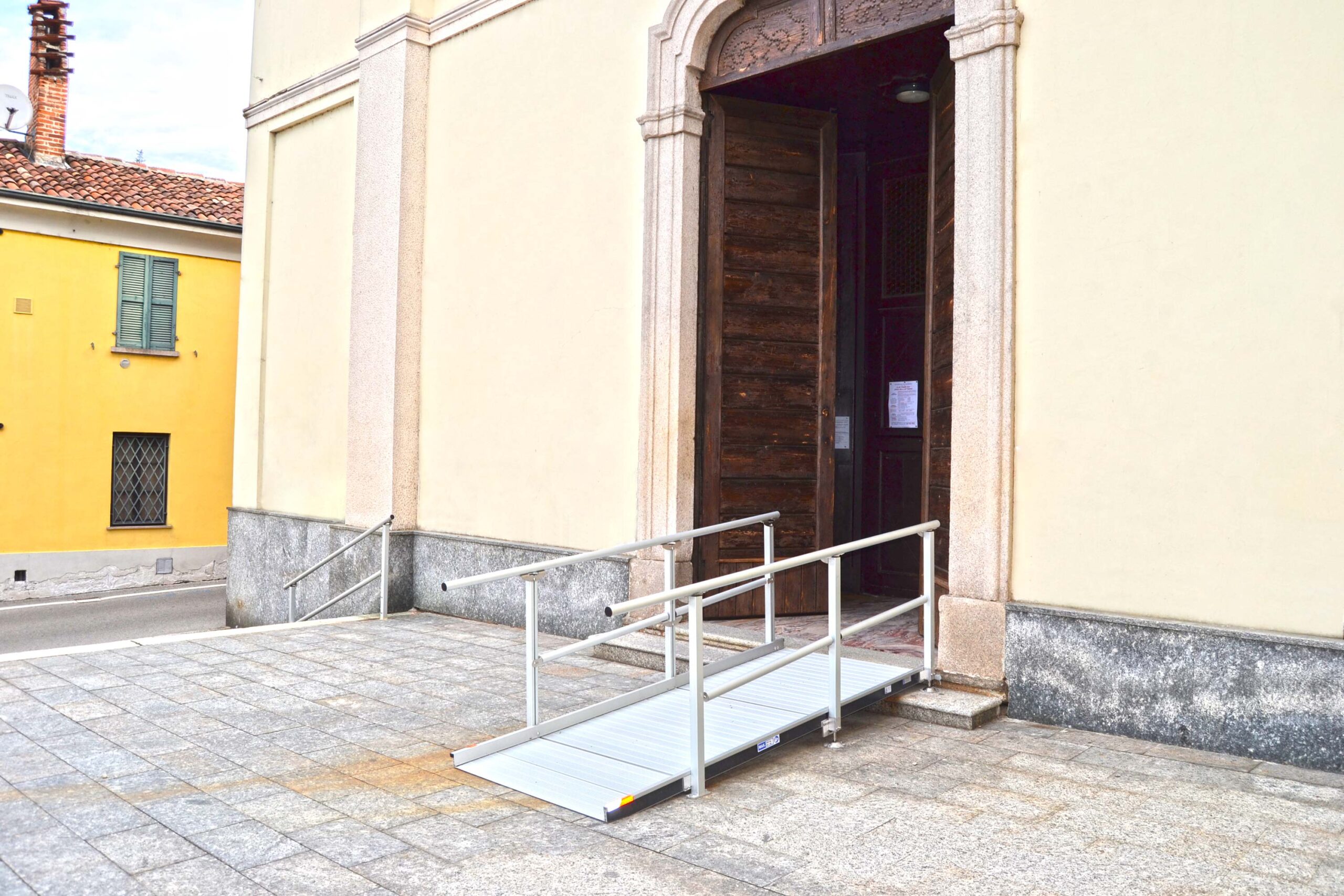
How to Design Accessible Public Spaces: Practical Solutions and Regulations You Need to Know
Accessibility is not a design concept—it is a measure of a society’s level of civilization.
Designing accessible public spaces means imagining cities where everyone—regardless of age, physical condition, or means of mobility—can live, participate, work, and move independently.
Yet, despite laws and regulations, architectural barriers remain one of the main causes of social and urban exclusion in Italy.
A step at the entrance of a public building, an unmarked level change, a ramp that is too steep: details that many people barely notice, but that limit the daily freedom of millions.
According to ISTAT, more than 3 million Italian citizens live with motor disabilities, and over 20% of people aged 65 and over encounter access barriers in public services.
In an ageing country, where reduced mobility is increasingly common, accessibility is not a cost—it is a necessity.
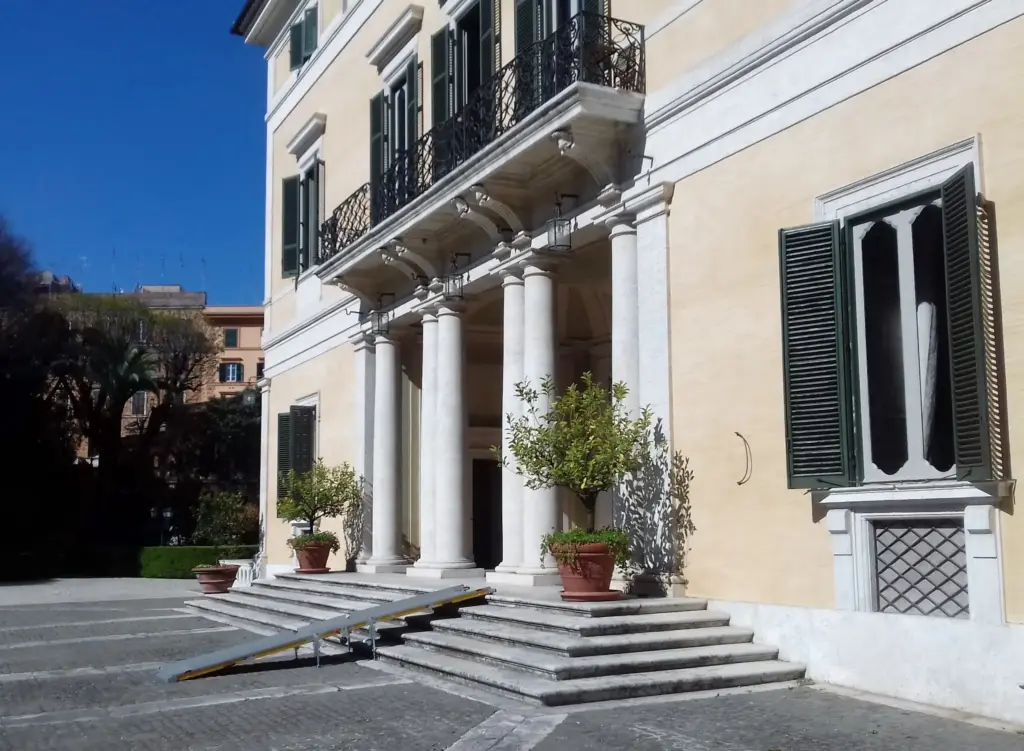
Italian regulations: a solid framework, still poorly applied
In Italy, the legislative framework has been clear for over thirty years.
The two main regulations are:
- Law 13/1989, which defines measures to eliminate architectural barriers in private and public buildings;
- Ministerial Decree 236/1989, which establishes the technical requirements to ensure accessibility and visitability of spaces.
These are complemented by Presidential Decree 503/1996, focused on public buildings, and the 2022 Guidelines of the Ministry of Infrastructure and Disability, which update criteria and best practices in line with universal design principles.
The principle is simple:
“An accessible environment is one that can be used by everyone, without adaptations or special solutions.”
Yet in practice, many interventions stop at formal compliance—meeting minimum dimensions, installing just any ramp—without considering the quality of the experience, aesthetic integration, and real safety.
From regulation to practice: what it really takes to create proper access
Designing accessible public spaces requires an integrated approach—both technical and human.
Lowering a step is not enough: it is essential to study the context, choose certified materials, and design safe, intuitive routes.
A compliant ramp must meet the following requirements:
- maximum slope of 8% (fixed), or 10–12% in certain exceptions depending on local regulations and context;
- minimum width of 90 cm;
- resting platforms every 10 meters of length;
- handrails on both sides, with continuous and comfortable grip.
These parameters are not just numbers—they are guarantees of autonomy and safety.
“Every centimeter matters,” explains Gerardo De Micco, Head of Access Ramps at WM System.
“An incorrect slope can turn a ramp into an obstacle. That’s why every project starts with precise technical surveys and dialogue with those who actually use the space.”
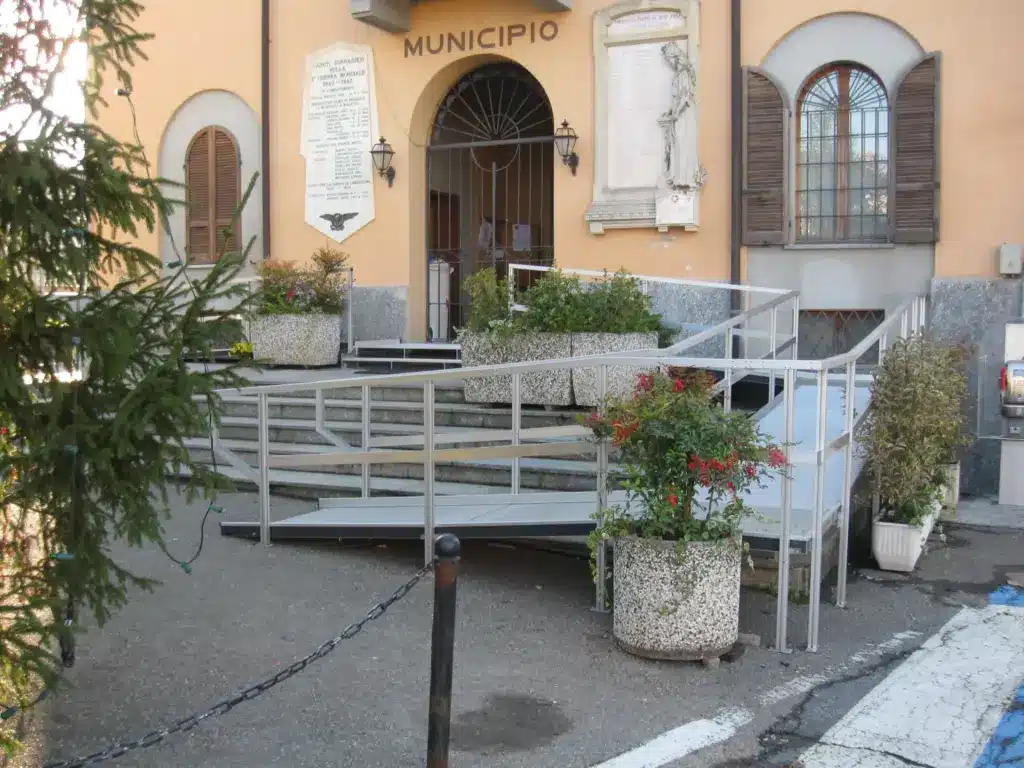
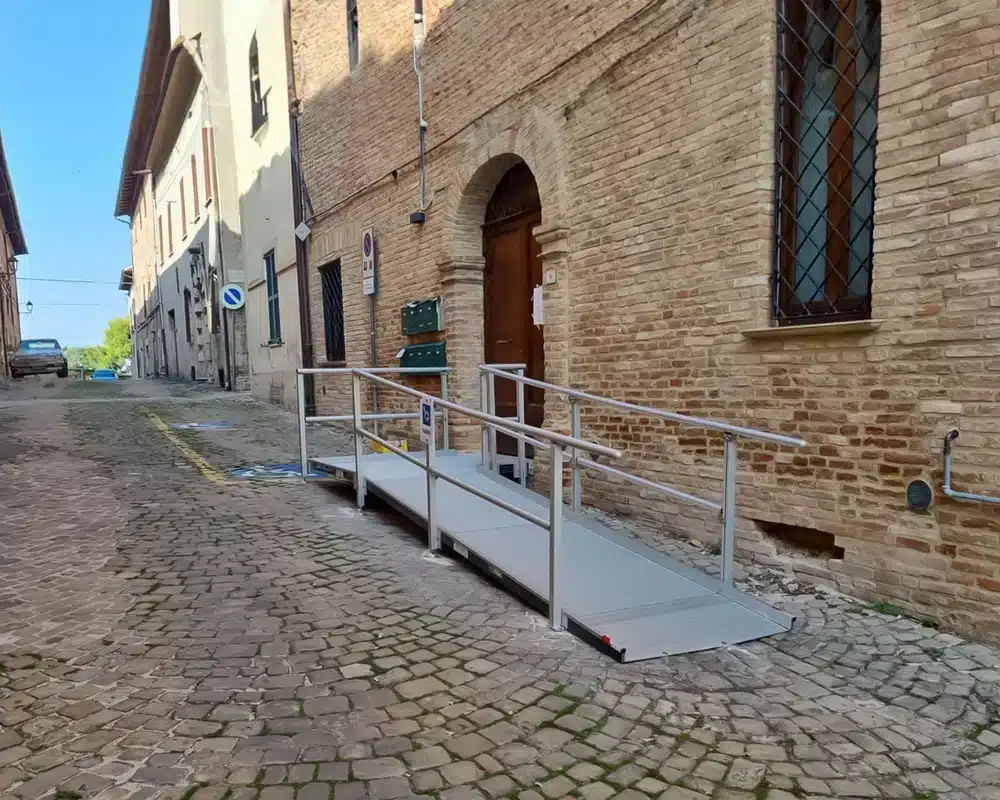
Materials and solutions: balancing safety and design
A common misconception is that accessibility compromises aesthetics.
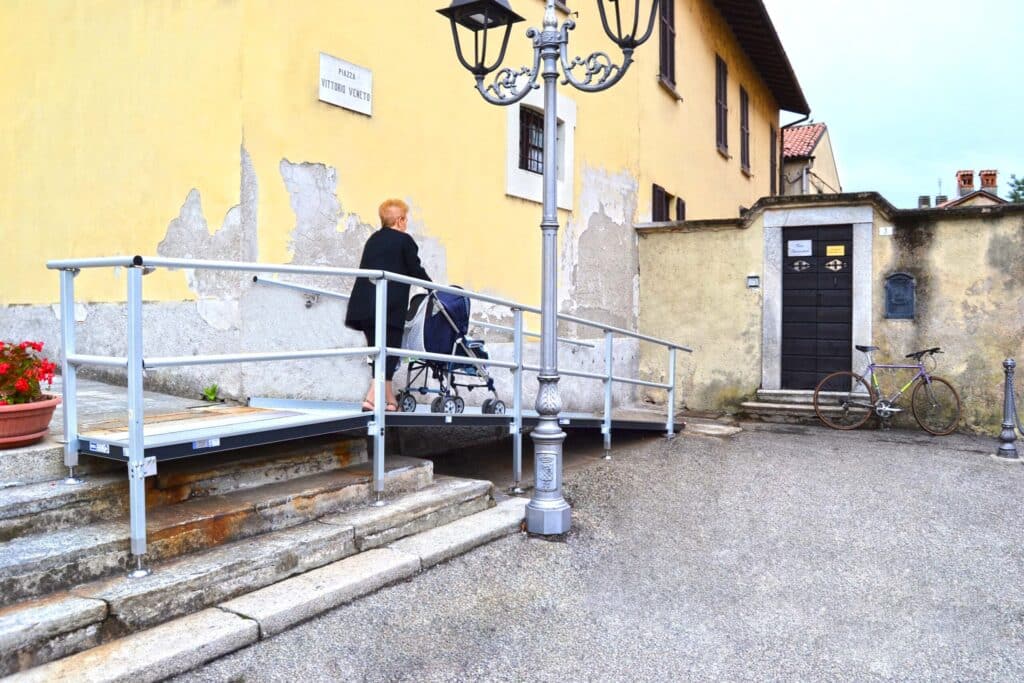
Today, thanks to technology and innovative materials, it is possible to create ramps that are functional, elegant, and perfectly integrated into their architectural context.
WM System ramps, for example, are made of anodized, anti-slip aluminum—a lightweight material that is resistant to corrosion and weather conditions.
This allows for a clean, contemporary look, even in historic or protected sites.
There are also modular ramps and portable ramps, ideal for temporary settings such as trade fairs, events, schools, or theaters.
They are quick to install, easy to remove or adapt, and perfect for ensuring immediate access without invasive construction work.
“Accessibility is also smart design,”
emphasizes Ilaria Ghidoni, Head of Sales Italy at WM System.
“The challenge is to design solutions that respect and enhance places. When a ramp is well designed, it almost goes unnoticed—it becomes part of the environment, not a disruption.”
Many access interventions stem from good intentions but lack technical expertise.
The result? Ramps that are too steep, slippery surfaces, or makeshift solutions made of wood or uncertified concrete.
In some cases, these “improvised ramps” are more dangerous than the barrier they were meant to remove.
That is why it is essential to rely on professionals who understand regulations, materials, and building constraints.
WM System works with public bodies, architectural firms, and local administrations, providing site inspections, consultancy, and tailor-made projects—always respecting the context, from historic city centers to modern business districts.
“Complying with the law is not enough. You need to understand people,”
says Monica Mazzoli, Head of Marketing and Communication.
“Designing accessibility means putting freedom of movement at the center, not bureaucracy.”
Urban accessibility: an investment that creates value
Creating accessible public spaces is not only a legal obligation—it is a strategic choice for the future of cities.
Accessible environments improve quality of life, cultural participation, and tourism competitiveness.
Cities that remove barriers attract more visitors, more investment, and greater trust.
Not by chance, European urban regeneration programs (such as PON Metro and ERDF 2021–2027) reward projects that integrate accessibility and inclusion criteria.
In this context, WM System stands out as a unique partner: combining engineering expertise, Italian craftsmanship, and an international network of certified dealers and installers.
Every ramp installed is the result of a shared process involving technicians, institutions, and people.
An accessible building is not just more convenient—it is more just.
Every well-designed ramp does more than overcome a height difference: it bridges a social and cultural gap.
And in a fast-moving world, inclusion is not a slowdown—it is an acceleration toward the future.
“The true measure of innovation is participation,”
concludes the WM System team.
“When a place is truly for everyone, it becomes better for each individual.”
Want to make your public space accessible, safe, and fully compliant?
Discover how WM System can support you in designing the most suitable solution:
👉 Contact us for a consultation
Accessibilità urbana: un investimento che genera valore
Creare spazi pubblici accessibili non è solo un obbligo normativo, ma una scelta strategica per il futuro delle città.
Un ambiente accessibile aumenta la qualità della vita, la partecipazione culturale e la competitività turistica.
Le città che abbattono le barriere attirano più visitatori, più investimenti e più fiducia.
Non a caso, i programmi europei per la rigenerazione urbana (come il PON Metro e il FESR 2021–2027) premiano i progetti che integrano criteri di accessibilità e inclusione.
In questo scenario, WM System rappresenta un interlocutore unico: unisce competenza ingegneristica, artigianalità italiana e una rete internazionale di rivenditori e installatori certificati.
Ogni rampa installata è il risultato di un percorso condiviso tra tecnici, enti e persone.
Un edificio accessibile non è solo più comodo, ma più giusto.
Ogni rampa progettata bene non serve solo a superare un dislivello, ma a colmare una distanza sociale e culturale.
E in un mondo che corre, includere non è un rallentamento: è un’accelerazione verso il futuro.
“La vera misura dell’innovazione è la partecipazione,”
conclude il team WM System.
“Quando un luogo è davvero per tutti, diventa migliore per ciascuno.”
Vuoi rendere il tuo spazio pubblico accessibile, sicuro e a norma?
Scopri come WM System può affiancarti nella progettazione della soluzione più adatta:
👉 Contattaci per una consulenza


